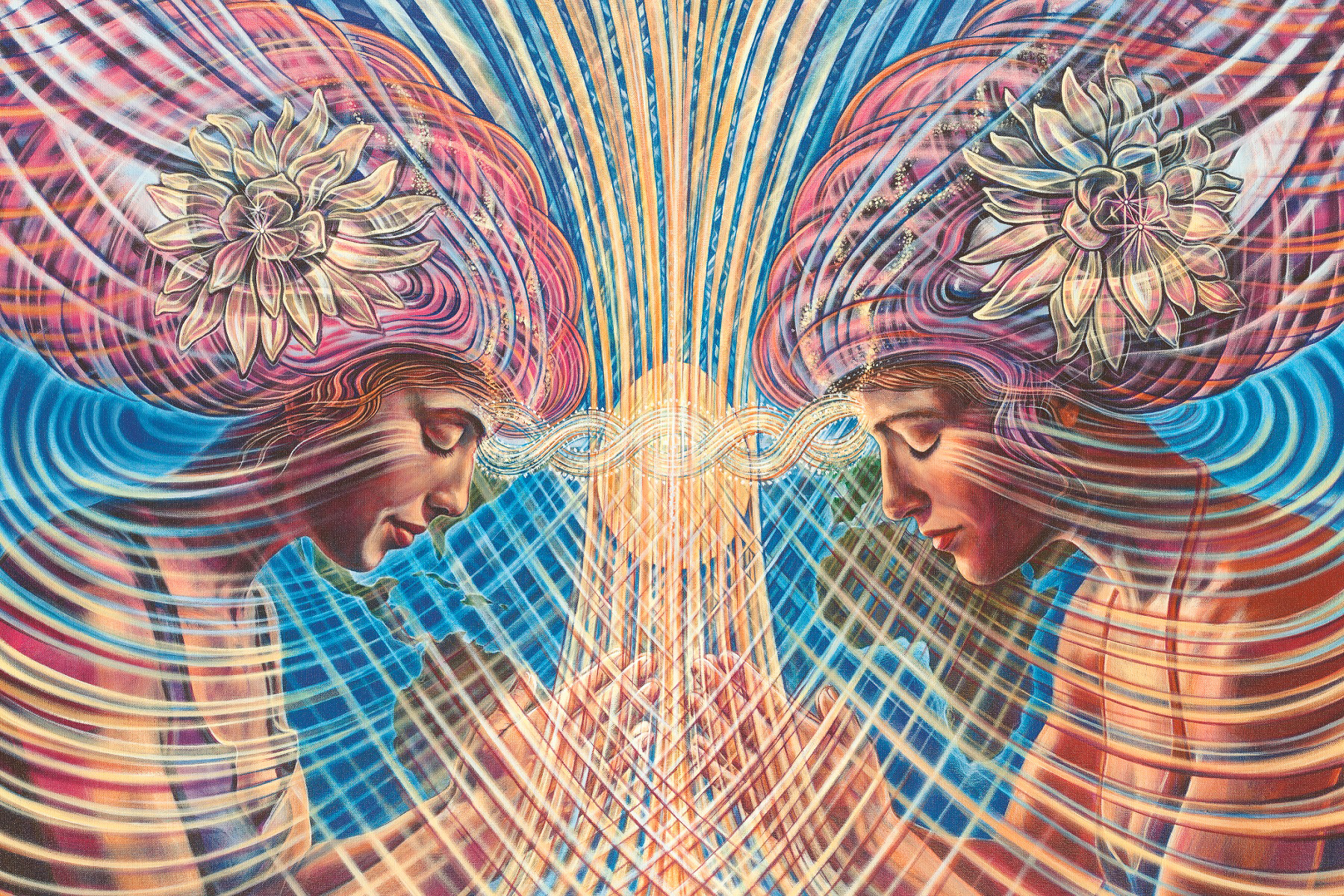
The traditional path of Light and Sound meditation has usually been understood as a sacred and guided process. In its older form, the seeker entered the path through a master, adept, or enlightened being who was able to transmit spiritual energy and open the inner faculties of Light and Sound.
Behind this process was often understood to be a greater intelligence — what we might call the Spiritual Hierarchy — overseeing the spiritual evolution of humanity and guiding the work through suitable human instruments.
In this traditional approach, initiation was not merely instruction. It was a spiritual opening. The first initiation connected the seeker with the inner Light and Sound. The second initiation deepened the process, helping the meditator move beyond the ordinary mind. Enlightenment was seen as the culmination: the dissolution of the separate self into a greater reality, followed by a transformed way of living.
The Strength of the Traditional Path
The great strength of the traditional path is structure.
The seeker is not left alone with powerful inner experiences. There is a map, a method, a teacher, a lineage, and a vocabulary. If the meditator hears the inner Sound, sees spiritual Light, encounters geometries, enters silence, or passes through profound inner states, these experiences can be understood as part of a known progression.
The traditional path also places emphasis on integration. The purpose is not simply to have experiences, but to become changed by them. The true evidence of progress is not only inner Light or Sound, but greater love, humility, compassion, steadiness, service, and freedom from the dominance of the separate self.
The New Wave of Spontaneous Awakening
Today, something different appears to be happening alongside the traditional paths.
Many people are having spontaneous awakenings. Some meditate; some do not. Some have no teacher, no initiation, no spiritual language, and no clear framework. Yet they may suddenly experience Light, Sound, unity, spiritual presence, expansion of consciousness, or a profound sense that death is not the end.
This suggests that the deeper spiritual energies may now be more accessible than before. The doorway is opening in unexpected places. People are being touched inwardly without necessarily knowing what has touched them.
However, the challenge with spontaneous awakening is integration.
A powerful experience may arrive before the person is prepared. They may not know whether they are having a spiritual opening, a psychological disturbance, a mystical experience, or something else entirely. Without guidance, the experience may be misunderstood, exaggerated, feared, or dismissed.
Awakening Is Not Always Enlightenment
This distinction is very important.
Many people today have awakenings, glimpses, openings, or mystical experiences. These can be beautiful and life-changing. But they are not necessarily enlightenment in the deeper traditional sense.
Awakening may open the door. Enlightenment is the completion of the journey through that door.
A person may glimpse unity and still retain fear, ego, confusion, ambition, emotional wounds, or spiritual pride. For this reason, it seems likely that although many people now meditate or experience awakening, relatively few attain full enlightenment.
The danger today is that a glimpse may be mistaken for completion. The traditional paths remind us that the journey must mature into stable realization, humility, wisdom, and service.
Two Approaches, One Deeper Movement
The traditional path and spontaneous awakening should not be seen as opposites.
The traditional path offers depth, structure, initiation, guidance, discipline, and a clear framework for spiritual development.
Spontaneous awakening shows that grace is not confined to one teacher, one lineage, one organisation, or one method. It suggests that the Light and Sound, or the deeper field of consciousness, may now be pressing more directly into human awareness.
The old path gives form to grace.
The new awakening shows that grace can overflow form.
The Real Test
The most important question is not simply how the awakening began.
The real question is what happens afterwards.
● Does the person become more loving?
● Do they become more truthful?
● Do they become less afraid?
● Do they become more compassionate?
● Do they integrate the experience into daily life?
● Do they become more humble, steady, useful, and awake?
These are the true signs of spiritual progress.
A traditionally initiated meditator may have access to profound inner energies, but if those energies do not soften the heart, the work is incomplete.
A spontaneously awakened person may have had a genuine glimpse, but if that glimpse does not mature into wisdom, love, and stability, it remains only the beginning.
Conclusion
The traditional path of Light and Sound meditation still has immense value because it provides a clear, practical, and protected way of working with spiritual energies. It guides the seeker from first contact, through deeper inner experience, toward the possibility of enlightenment.
At the same time, the increasing number of spontaneous awakenings suggests that humanity may now be entering a new phase. The Light and Sound, the inner presence, and the deeper field of consciousness appear to be reaching people in ways that do not always depend on formal initiation or traditional structures.
The task now is to bring the two together: the depth of the traditional path with the openness of the present age; the wisdom of initiation with the reality of spontaneous awakening; and the inner experiences of Light and Sound with the practical work of becoming more loving, conscious, and fully human.