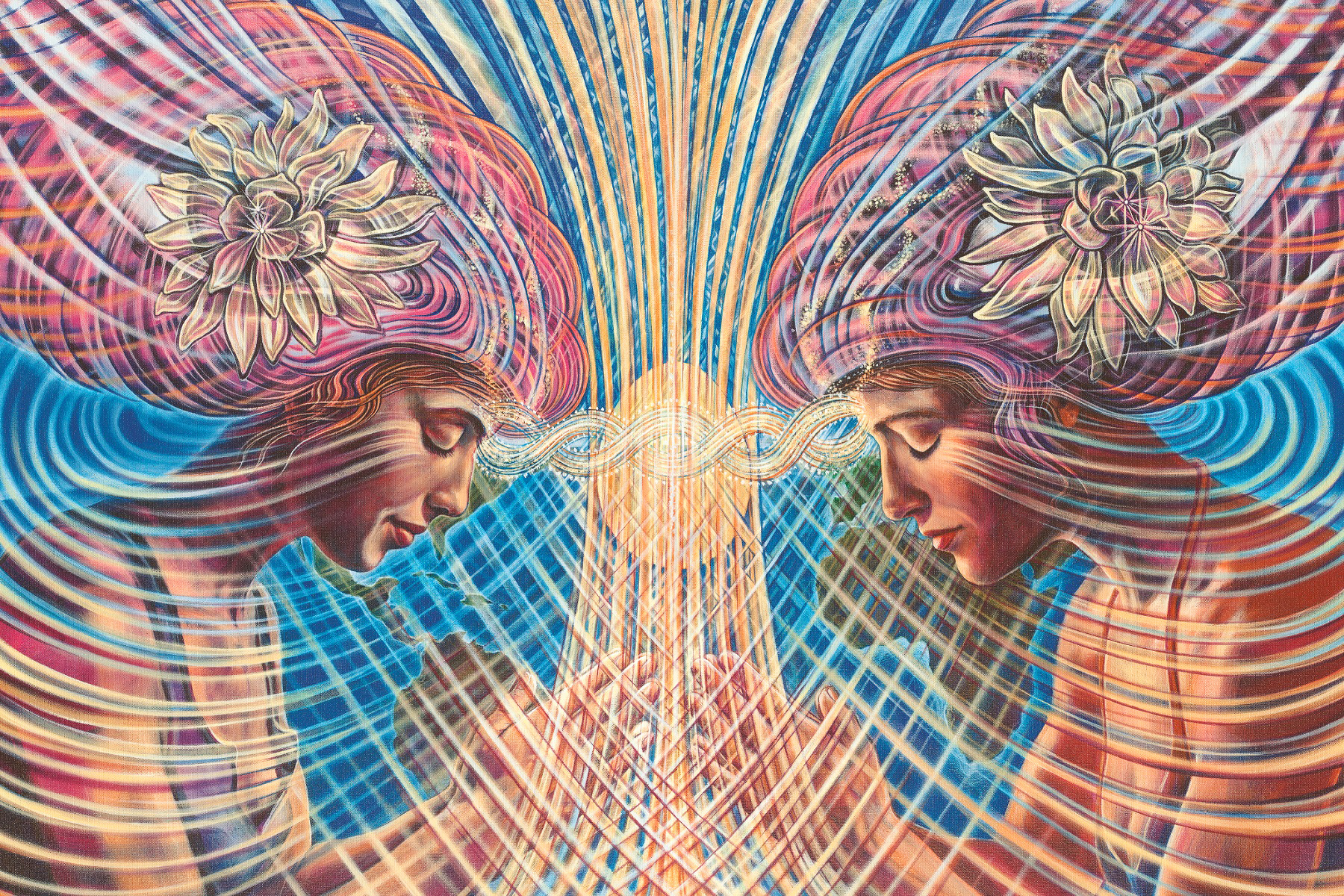
Death appears to bring a human life to an end. But does it necessarily bring consciousness to an end? Across cultures and throughout history, people have described experiences suggesting that awareness may extend beyond ordinary physical existence. Near-death experiences, mystical states, communications apparently involving those who have died, and profound experiences surrounding death all raise the possibility that physical life may be one stage within a much greater journey of consciousness.
None of these experiences provides a complete map of what happens after death. Nor can their interpretation be established with certainty. Yet taken together they invite us to consider a deeper view: perhaps death is not simply the extinction of the individual, but a transition from one condition of existence into another.
If this is so, the afterlife may be far more extensive than the traditional idea of a single destination called heaven.
Physical life would then represent one remarkable chapter within a much longer story.
Birth brings consciousness into a particular human experience.
Death releases it from that experience.
And the journey may continue.
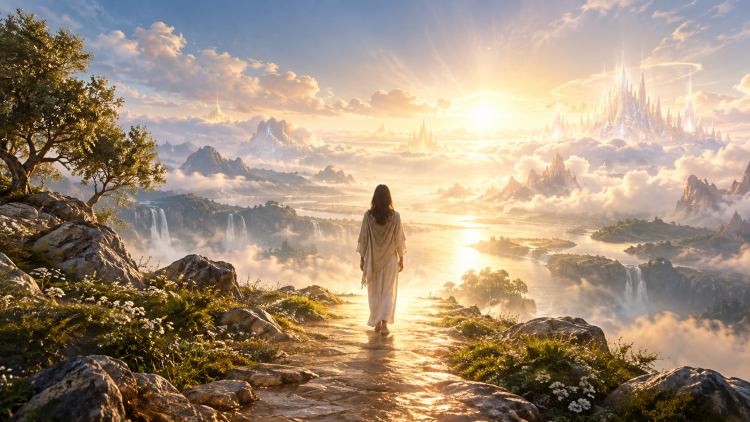
Leaving the Physical World
The conventional material view associates consciousness closely with the functioning brain. When the brain permanently ceases to function, consciousness is therefore generally assumed to disappear.
But another possibility has long been considered.
The brain may not create the whole of consciousness. It may instead act, at least partly, as an organiser or interface through which consciousness functions during physical life.
This remains speculative, but it provides a very different way of interpreting some of the experiences reported by people who have come close to death.
Some describe becoming aware of themselves apparently outside their physical bodies. They may report observing medical activity, hearing conversations or perceiving their surroundings from an unfamiliar perspective.
Others describe no obvious sense of leaving the body at all.
Instead there is simply an extraordinary change in awareness.
Pain may disappear.
The heaviness of the body is gone.
Thought may become unusually clear.
There can be a profound feeling of freedom, expansion or peace.
For someone who has been seriously ill, the contrast can be particularly striking. The physical body may have become exhausted, confused or painful, while consciousness beyond it is sometimes described as exceptionally vivid and alive.
Experiences differ greatly, and we should not assume that everyone necessarily encounters death in the same way.
Yet if consciousness does survive, there may eventually come a point at which awareness is no longer centred upon the physical body.
The familiar physical world begins to recede.
Another order of experience becomes apparent.
From this perspective, death is not destruction.
It is transition.
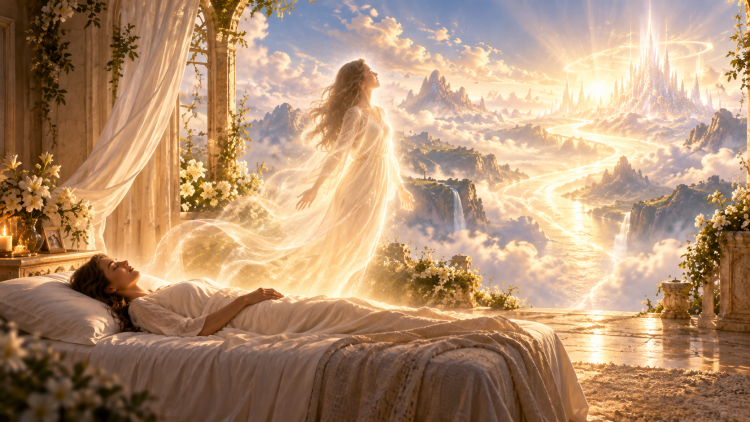
Crossing the Threshold
Descriptions of what happens around death vary enormously, but certain themes appear repeatedly.
Light is one of them.
Peace is another.
Some people describe movement through darkness, a tunnel or an intermediate state before encountering brilliant light. Others describe the transition as almost instantaneous: one moment they are aware of physical existence and the next they find themselves within an entirely different reality.
Another recurring theme is the presence of other beings.
Deceased relatives and friends are sometimes reported.
There are also descriptions of guides, helpers or luminous presences associated with an extraordinary feeling of love and reassurance.
Experiences involving deceased relatives may occasionally begin before physical death itself, particularly during the final stages of a long illness.
There is no reason, however, to assume that everyone must experience precisely the same sequence.
The transition may partly reflect the individual.
Someone dying peacefully after a long life may experience death differently from someone whose death is sudden or unexpected.
Expectations and emotional attachments could influence the initial experience.
Spiritual development may also be relevant.
Someone who has spent many years exploring meditation may already be familiar with profound stillness, inner light or states in which awareness becomes less strongly identified with the physical body.
For such a person, death might contain an element of recognition rather than complete unfamiliarity.
There may also be a period of adjustment.
Some people may immediately understand that physical life has ended. Others may require time before recognising what has happened.
Death may therefore be better understood not simply as travelling from one location to another, but as a change in the level upon which consciousness is functioning.
One reality recedes.
Another becomes dominant.
The journey continues.
Many Levels of the Afterlife
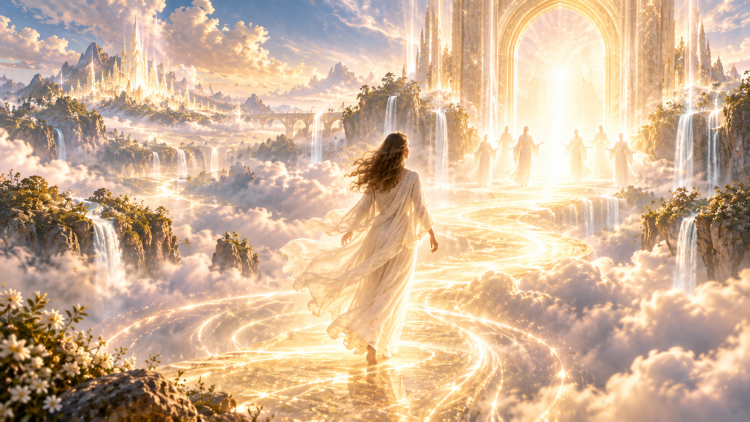
What we call the afterlife may not be a single world or destination.
A deeper view suggests that physical reality could represent only one level within a much wider spectrum of existence.
Some states closest to physical experience are described in surprisingly familiar terms.
There may appear to be landscapes.
There may be buildings, gardens and communities.
People may encounter friends and relatives.
Individual identity remains recognisable, and the environment may seem almost as substantial as the physical world.
Yet descriptions begin to change as subtler states are approached.
Form becomes less rigid.
Thought and intention may exert a much greater influence upon experience.
Communication may become more immediate and less dependent upon spoken language.
The distinction between inner thought and outer environment may become increasingly difficult to define.
Beyond this, accounts become harder to translate into ordinary language.
There are descriptions of extraordinary colour, harmony, light and interconnectedness.
At still deeper levels, familiar landscapes and individual forms may disappear almost completely.
Mystics and contemplatives have spoken instead of unity, pure awareness and states beyond ordinary conceptual thought.
“Heaven” may therefore be far greater than the idea of one beautiful destination.
It could encompass an immense range of conscious experience.
This may also help explain why accounts of the afterlife differ so greatly.
Someone describing departed relatives within a beautiful landscape and another person describing an apparently limitless realm of light need not necessarily be contradicting one another.
They may simply be describing different levels within a much greater reality.
Understanding the Life We Have Lived
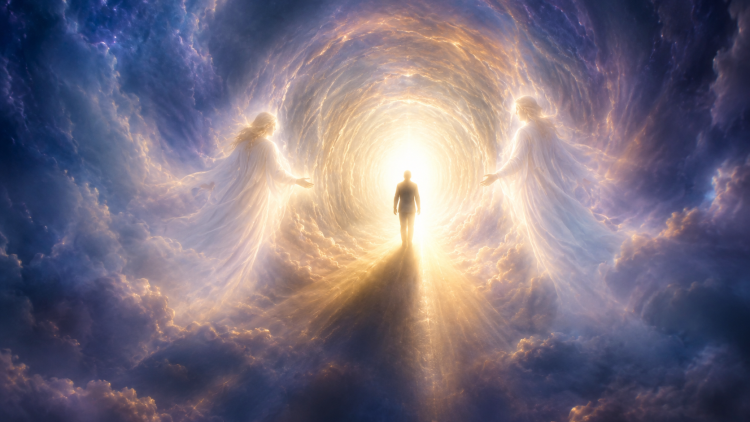
One of the most striking features reported in many near-death experiences is the life review.
Events from the person’s life may return with extraordinary clarity.
Sometimes an entire lifetime appears to be understood almost instantaneously. In other cases, particular events become prominent.
Yet the experience is often described as much more than memory.
A person may become aware not only of what they did, but of the effects their actions had upon other people.
A small kindness that seemed insignificant at the time may reveal consequences extending far beyond anything the individual realised.
Equally, an unkind word or action may apparently be understood from the perspective of the person who received it.
The boundaries between ourselves and others seem less absolute.
This raises an intriguing possibility concerning the traditional idea of judgement.
Perhaps the deepest judgement is not imposed externally.
Perhaps it arises through understanding.
How did we live?
Where did we love?
Where did fear influence our choices?
When did we help another person?
When did we cause unnecessary pain?
What did we learn?
Which opportunities did we recognise, and which did we overlook?
Such an experience need not be about punishment.
Its purpose may instead be education.
During physical life we usually experience events primarily from our own viewpoint. A life review might reveal something of the much wider pattern of consequences surrounding our actions.
We may see ourselves more completely.
And that understanding may become part of whatever comes next.
The Continuing Journey of the Soul
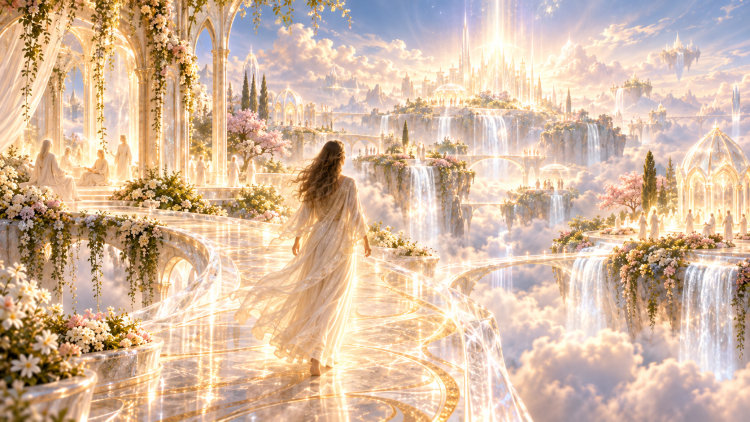
If consciousness can exist beyond the physical world, another question naturally follows.
Why enter physical life at all?
Why enter a world containing uncertainty, limitation, illness, separation, suffering and death?
One possibility is that these very limitations give physical existence its extraordinary value.
Here, choices have consequences.
Other people have independent needs and desires.
The future is uncertain.
We normally have little or no memory of anything that may have preceded birth.
We must therefore make choices without seeing the complete picture.
That creates possibilities that might not exist in quite the same way elsewhere.
Love matters because separation seems real.
Compassion matters because suffering is possible.
Courage matters because fear is possible.
Forgiveness matters because injury is possible.
Patience matters because our wishes are not immediately fulfilled.
Physical life may therefore provide an unusually concentrated environment for the development of consciousness.
And one lifetime may not necessarily be the whole process.
Different lives could provide radically different perspectives.
Strength and vulnerability.
Wealth and poverty.
Parenthood and childhood.
Leadership and dependence.
Health and illness.
Achievement and failure.
Belonging and isolation.
Each reveals something different about human experience.
Within such a picture, reincarnation can be understood not primarily as reward or punishment but as part of a much longer process of experience and development.
There may be qualities still to develop.
Relationships to encounter.
Consequences to understand.
Experiences that can only arise through physical existence.
This does not require every detail of a life to be predetermined.
Meaningful development requires meaningful choice.
There may be circumstances and possibilities associated with a particular life while enormous freedom remains in how an individual responds to them.
The body changes.
The personality changes.
The circumstances change.
Yet something deeper may continue.
Beyond Reincarnation
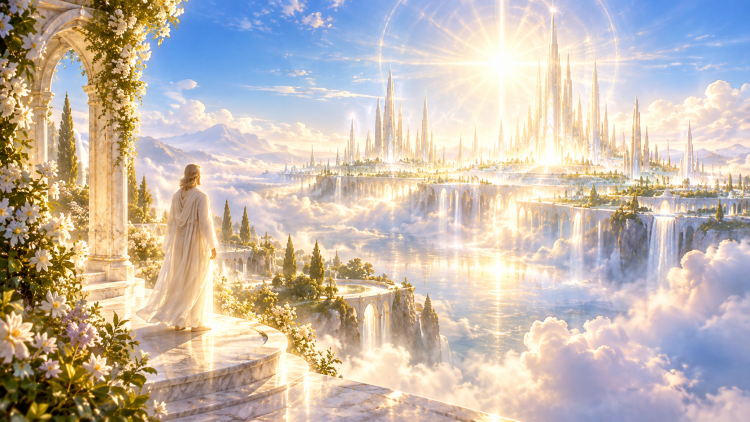
Perhaps even repeated physical lives are not the final purpose of the journey.
Eventually another question emerges.
What exactly is this consciousness that has been travelling through all these experiences?
The spiritual search begins to turn inward.
Who am I?
What is awareness itself?
What remains when ordinary thought becomes silent?
Are we truly separate centres of consciousness, or could individual minds be expressions of something much greater?
This is where the journey of the soul begins to meet the journey of spiritual awakening.
There may initially be brief glimpses.
Unexpected stillness.
Inner light.
Moments when ordinary thought disappears.
A profound sense of interconnectedness.
As such experiences deepen, the individual may begin to question the assumption that consciousness is entirely enclosed within a separate physical person.
The question is no longer simply:
“What happens to me when I die?”
It becomes:
“What is the ‘me’ that dies?”
At the deepest stages described by contemplatives, the apparent distinction between individual consciousness and a greater reality may become increasingly transparent.
Words such as Source, Absolute, Universal Consciousness and Pure Awareness have been used to point towards this possibility.
The words themselves are not the experience.
They are attempts to describe something that may ultimately lie beyond ordinary language.
The journey of consciousness may therefore have a remarkable direction.
It is not simply a journey through worlds.
Ultimately, it may be a journey towards recognition.
Consciousness moves through experiences, relationships, perhaps many lives and many levels of existence, gradually discovering its own deeper nature.
The search that appeared to lead outward eventually turns inward.
And what seemed to be a completely separate consciousness may discover that it was never entirely separate from the greater reality from which it arose.
Death would then be neither the end of existence nor the ultimate destination.
It would be one doorway within a much greater journey.
In Essence
● Death may represent a transition of consciousness rather than its extinction.
● The experience surrounding death may differ according to the individual, their awareness and the circumstances of transition.
● The afterlife may encompass many levels of experience, from environments resembling physical existence to increasingly subtle states of light and consciousness.
● A review of the life just lived may provide deeper understanding of our choices and their effects upon others rather than simply judgement.
● Reincarnation may form part of a continuing process through which consciousness experiences, learns and develops.
● Spiritual awakening may eventually lead beyond repeated physical lives towards recognition of the deeper nature and source of consciousness.
No single account can tell us with certainty what lies beyond death. Yet the experiences reported across many different circumstances invite us to consider that a human lifetime may be both profoundly important and only one part of a much greater story. Birth may not be the absolute beginning, and death may not be the absolute end. The continuing journey may ultimately concern not simply where consciousness goes, but what consciousness discovers itself to be.