Summary
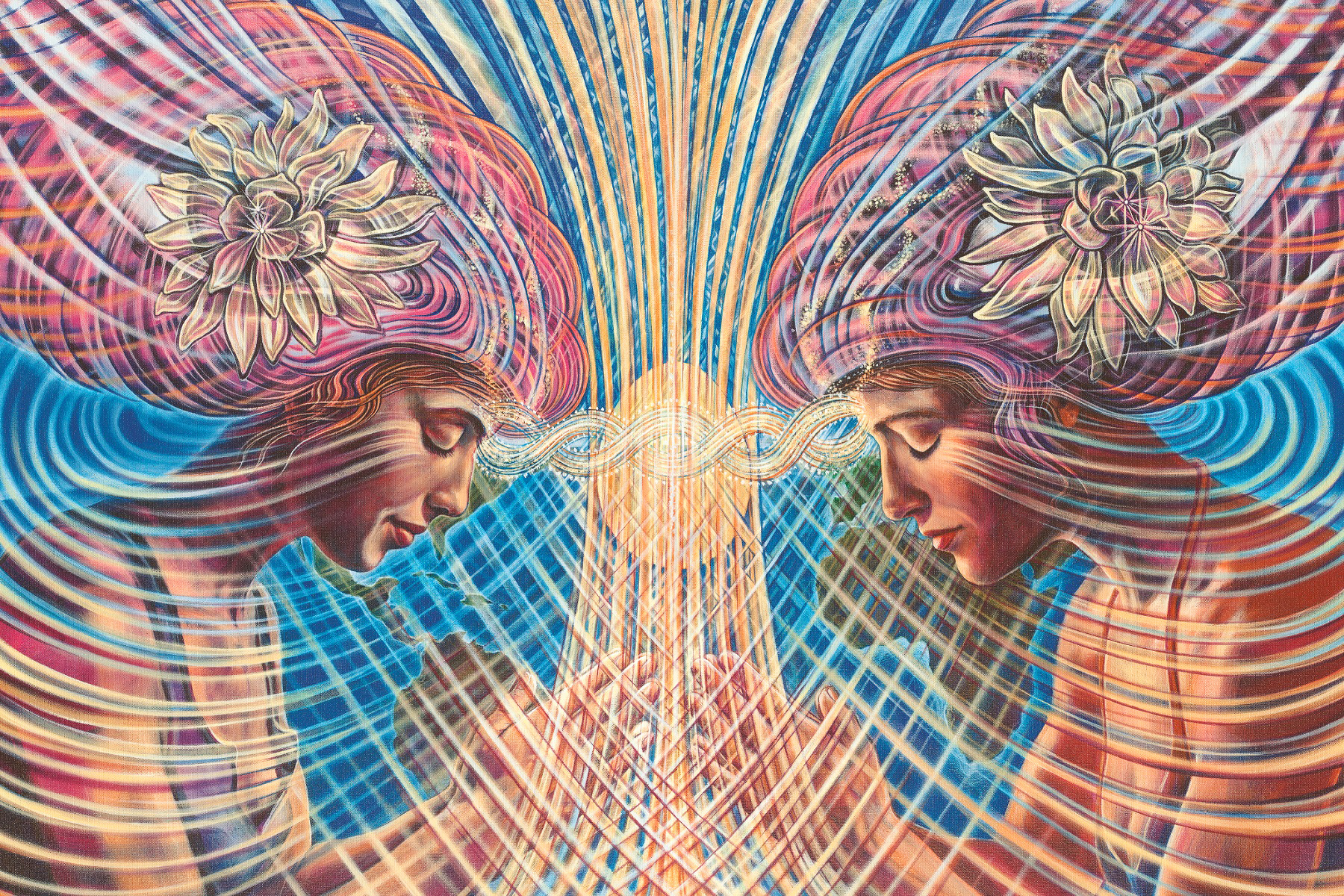
Beyond the activity of thought, there may be a form of Knowing that does not depend upon reasoning, memory, language or intellectual understanding. Throughout human history, those who have explored deep meditation and spiritual awakening have sometimes described an extraordinary clarity that arises when the ordinary mind becomes silent. This Knowing is not the acquisition of information, but an immediate recognition of something fundamental about Consciousness and existence itself.
The mind ordinarily knows through observation, comparison and interpretation. It distinguishes between the person who knows and the object being known. Yet deeper states of Awareness may reveal a form of recognition in which these distinctions become unnecessary. Rather than knowing something, there may simply be Knowing itself.
Within advanced spiritual experience, particularly in accounts of Enlightenment, this distinction becomes especially significant. Even extraordinary experiences of inner Light, Sound or expanded Consciousness may still involve an experiencer and something experienced. A deeper transformation may occur when this apparent separation disappears, leaving an immediacy of Awareness that cannot adequately be described through ordinary language.
Perhaps the most profound possibility is that the mind seeks to know Reality, while beyond the mind, Reality may simply Know itself. Such an interpretation remains a spiritual and philosophical perspective rather than an established scientific conclusion, but it invites us to reconsider the nature of Consciousness, identity and the meaning of Enlightenment.
Full Article
The human mind is an extraordinary instrument, capable of reasoning, remembering, imagining and constructing an increasingly sophisticated understanding of the world. Yet there is a profound distinction between intellectual knowledge and what some spiritual traditions describe as direct Knowing.
We ordinarily understand knowledge as something acquired. We learn, investigate, compare and gradually build a picture of reality. However, those who have explored the deeper states of meditation sometimes describe a very different form of understanding, one that seems to arise without the usual processes of thought.
This raises an intriguing question: is the mind the source of all Knowing, or might Consciousness possess a more fundamental capacity for recognition that exists independently of conceptual thinking?
To explore this possibility, we must first understand how ordinary knowledge differs from the immediate experience of Awareness.
The Mind and the Nature of Knowledge
The ordinary human mind operates through distinctions.
There is a subject who knows, an object that is known and a process through which knowledge is acquired.
When we observe a beautiful sunset, for example, the mind identifies colours, recognises clouds, recalls previous experiences and perhaps produces a feeling of wonder.
All of this is natural and valuable.
Yet something more fundamental is taking place.
Before the mind identifies the sunset, there is already Awareness.
Before the first thought arises, something is present within which thought can occur.
We do not need to think ourselves into being aware.
Awareness is already present before we begin describing what we experience.
This suggests an important distinction between Consciousness itself and the activities occurring within Consciousness.
Thoughts, memories, emotions and perceptions may be understood as contents of Awareness, while Awareness is the condition through which these contents become known.
A deeper spiritual perspective suggests that the mind may not be the ultimate source of Knowing, but rather an instrument through which a more fundamental Consciousness expresses and interprets experience.
This possibility does not diminish the importance of intellectual understanding. It simply raises the question of whether thought represents the entirety of our capacity to know.
When Thought Becomes Silent
In ordinary life, the mind is almost continuously active.
Thoughts arise spontaneously, accompanied by memories, expectations, emotions and judgements.
Even when we attempt to meditate, mental activity may continue for some time.
With sustained practice, however, the relationship between Awareness and thought can begin to change.
Rather than becoming absorbed in every passing idea, we may learn to observe thoughts without identifying with them.
As the mind becomes quieter, a different quality of experience may emerge.
There may be stillness without dullness.
There may be silence without unconsciousness.
And there may be an extraordinary clarity without any particular thought being present.
This is one of the most intriguing features of deep meditation.
The absence of conceptual activity does not necessarily imply the absence of Awareness.
Indeed, some practitioners describe states in which the ordinary mind becomes almost completely silent while Consciousness appears exceptionally vivid.
There may be no question being considered and no intellectual problem being solved.
Yet there is presence.
There is Awareness.
And there may be a profound sense of Knowing.
This suggests that clarity and understanding may not always depend upon the processes through which the mind ordinarily acquires information.
Knowing Through Being
Consider the difference between the statements “I know that I exist” and “I AM.”
The first is a proposition that can be considered intellectually.
It can be examined, debated and expressed through language.
The second may point towards something more immediate.
Before we form any explanation of our existence, there is the simple fact of experiencing.
We do not ordinarily need to prove our immediate experience to ourselves before it occurs.
In this sense, Being precedes our intellectual description of Being.
A deeper view suggests that spiritual Knowing may arise from this immediacy.
The mind understands by forming relationships between concepts. It builds knowledge through distinctions, comparisons and explanations.
But Consciousness may possess a more direct form of recognition that does not require these intermediate processes.
One might express this distinction as follows:
The mind knows by understanding something. Consciousness Knows by Being.
This does not imply that every impression arising in meditation represents an ultimate truth.
The interpretation of spiritual experience may still be influenced by memory, expectation and personal belief.
Nevertheless, the experience of immediate Awareness raises a profound question about the relationship between Consciousness and knowledge.
Perhaps some aspects of reality can be recognised without first being translated into thought.
Beyond the Observer and the Observed
An important stage in spiritual development may involve discovering that we are not identical to the continuous activity of our minds.
Thoughts arise and disappear.
Emotions change.
Sensations come and go.
Yet throughout these changes, there can be a continuing sense of Awareness.
This recognition can create a profound shift in identity.
Instead of experiencing ourselves solely as the personality with its memories, concerns and expectations, we may begin to identify more deeply with the Awareness within which these activities occur.
However, even this recognition may contain a subtle division.
There is still an observer watching thoughts, sensations and experiences.
Some accounts of advanced meditation and Enlightenment describe a further transformation in which this apparent separation disappears.
There is no longer a distinct observer standing apart from experience.
There is simply Awareness itself.
In such descriptions, Knowing is not something performed by an individual consciousness looking outward towards an object.
Rather, Knowing and Being appear inseparable.
The familiar distinction between the knower and the known no longer seems necessary.
This is sometimes described as nondual Awareness, although the term is only a conceptual representation of something that may transcend concepts altogether.
The experience raises an intriguing possibility: at the deepest level, Consciousness may not need to divide reality into separate parts in order to Know.
Spiritual Light, Sound and the Deeper Recognition
Within advanced spiritual meditation, particularly approaches involving inner Light and Sound, practitioners may report experiences that differ profoundly from ordinary sensory awareness.
These can include extraordinary luminosity, subtle inner Sound, expanded states of Consciousness and changes in the familiar sense of personal identity.
Such experiences may be deeply meaningful and transformative.
They may also suggest that our everyday perception represents only a limited aspect of what Consciousness is capable of experiencing.
Yet an important distinction remains.
Even an extraordinary spiritual experience may involve someone who is experiencing something.
There may be a perception of Light, an awareness of Sound or an encounter with a state that appears beyond ordinary physical reality.
The experience may be remarkable, but there can still be an experiencer and an experience.
A deeper interpretation of Enlightenment suggests that the most fundamental transformation may not consist simply of encountering increasingly extraordinary phenomena.
It may involve a change in the very nature of Knowing.
Rather than discovering another experience, Consciousness may come to recognise its own nature directly.
In this interpretation, Enlightenment is not merely an accumulation of spiritual knowledge or the attainment of unusual perceptual abilities.
It is a fundamental transformation in the relationship between Awareness, identity and reality.
This may help explain why some accounts of profound spiritual realisation describe an extraordinary simplicity.
What is recognised does not necessarily feel newly acquired.
Instead, there may be a sense that something fundamental has always been present, although previously obscured by the activity of the mind and the limitations of personal identification.
The language of recognition may therefore be more appropriate than the language of discovery.
The Paradox of Absolute Certainty
One of the most interesting features of accounts of profound spiritual Knowing is the extraordinary certainty sometimes associated with them.
Ordinary knowledge is usually provisional.
We gather evidence, consider alternatives and revise our conclusions when new information becomes available.
But in some deep contemplative states, individuals report a recognition that seems to require no verification.
There is no apparent doubt, no process of reasoning and no need to establish a conclusion.
The Knowing seems complete in itself.
However, an important distinction must be preserved between the certainty of an experience and the accuracy of the explanations subsequently attached to it.
A person may experience profound unity, timelessness or an apparent transcendence of individual identity.
The experience itself may be undeniable to the person undergoing it.
Yet its implications for the ultimate nature of the universe remain open to interpretation.
For example, an experience of unity might suggest that all Consciousness is fundamentally interconnected.
It might also reflect a transformation in the ordinary mechanisms through which the mind constructs a sense of separation.
These possibilities need not be treated as mutually exclusive, but neither should one interpretation automatically be regarded as established fact.
The most balanced approach is to respect the depth of spiritual experience while remaining thoughtful about the conclusions drawn from it.
This distinction allows profound Knowing to be explored without confusing immediate experience with universal proof.
Indeed, genuine spiritual maturity may involve becoming increasingly comfortable with the difference between what is directly recognised and what remains mysterious.
Knowing, Consciousness and the Nature of Reality
If Consciousness possesses a dimension of Knowing that is not dependent upon ordinary thought, this raises questions extending far beyond meditation.
What is the relationship between Consciousness and the physical brain?
Is Awareness entirely produced by biological processes, or might the brain participate in, organise or express a more fundamental aspect of reality?
Could Consciousness exist in forms that are not dependent upon the familiar structures of human perception?
These questions are particularly relevant to the exploration of the soul, spiritual awakening and the possibility of life beyond physical death.
If Consciousness is entirely generated by the functioning brain, its continuation after death would require an explanation not currently established by science.
If, however, Consciousness has a more fundamental relationship with reality, then the possibility of its continuation beyond bodily existence becomes philosophically conceivable.
Neither possibility is settled simply by the experience of Knowing beyond the mind.
Nevertheless, such experiences encourage us to examine assumptions about the limits of Consciousness.
A deeper spiritual view suggests that reality may possess levels or dimensions of connectedness that are not immediately apparent through ordinary sensory perception.
Within such a perspective, individual minds might represent particular expressions of a more encompassing Consciousness.
The apparent separation between ourselves, others and the universe might then be understood as a feature of ordinary experience rather than an ultimate division within reality.
This interpretation remains speculative, but it offers a framework for considering why profound spiritual experiences so often involve descriptions of unity, interconnectedness and the dissolution of separation.
Perhaps the deepest Knowing is not an awareness of something beyond ourselves.
Perhaps it is a recognition that the distinction between ourselves and the wider reality is less absolute than we ordinarily imagine.
When Even Knowing Falls Away
There is a final subtlety that deserves consideration.
Throughout spiritual exploration, we naturally speak of Awareness, Consciousness, recognition and Knowing.
Yet all these words belong to language, and language operates through distinctions.
To speak of Knowing suggests that there is something to be known.
To speak of Consciousness suggests that it can be identified or defined.
Even the expression “pure Awareness” may encourage the mind to imagine a particular state that can be sought and attained.
But what if the deepest reality cannot be adequately represented as a state, an experience or an object of knowledge?
What if the final limitation is not simply the activity of thought, but the assumption that reality must be understood through the relationship between a knower and something known?
At this point, the language of Knowing itself may become inadequate.
There may be no sense of acquiring knowledge, reaching a conclusion or discovering a previously hidden truth.
There may simply be Being, without the familiar divisions through which the mind ordinarily interprets existence.
This is not necessarily an absence of understanding.
Rather, it may represent a form of immediacy in which understanding, existence and Awareness are no longer experienced as separate.
The mind seeks answers because it experiences questions.
But in the deepest stillness, there may be no question requiring an answer.
Nothing needs to be confirmed.
Nothing needs to be explained.
Nothing needs to be added.
The extraordinary possibility is that what we have spent a lifetime seeking to understand may, at the deepest level, be inseparable from the very Consciousness through which the search has taken place.
In Essence
● Ordinary knowledge depends upon thought, memory, reasoning and the distinction between the observer and the observed.
● Knowing beyond the mind refers to a possible form of direct Awareness that does not require conceptual understanding or intellectual interpretation.
● Deep meditation may reveal states of exceptional clarity in which thought becomes silent while Awareness remains present.
● Advanced spiritual realisation may involve the dissolution of the apparent separation between the knower, the process of Knowing and what is known.
● The certainty associated with profound spiritual experience deserves respect, while interpretations of its ultimate meaning should remain open to thoughtful examination.
● At the deepest level, even the distinction between Knowing and Being may disappear, suggesting a reality that cannot be adequately captured through language.
Perhaps the greatest paradox of spiritual awakening is that the mind searches for an understanding of Consciousness, while Consciousness may already be the very foundation of every experience through which that search unfolds. What appears to be a journey towards greater knowledge may ultimately become a journey beyond the need to know. And in that profound simplicity, there may be neither a separate seeker nor something still to be found, but only the silent immediacy of That Which Is.